-
-
-
[Editor’s Insight] Your Guide to Driving in Korea
-
12/10/2025
-
46K
8
7
-
-
-
-
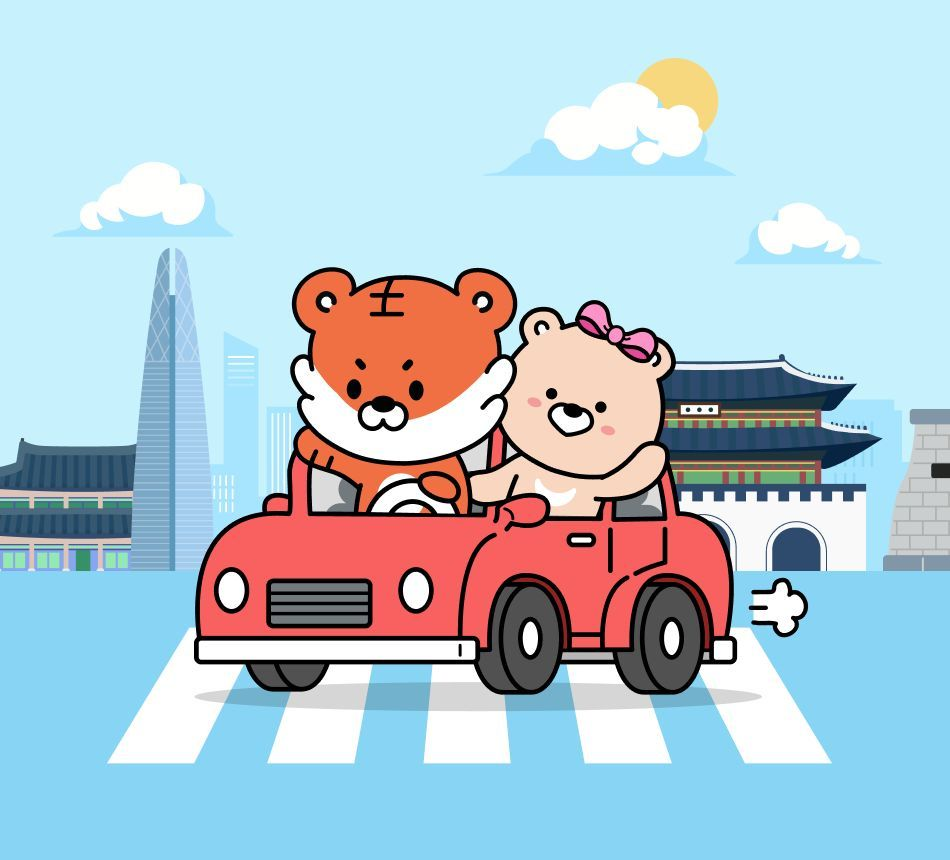
If the idea of traveling in a foreign country isn’t exciting enough, driving in that country takes the thrill to a whole new level. Aside from the universal traffic rules—like red means stop and green means go—every country has its own unique traffic laws, not to mention the unspoken agreements among drivers that aren’t covered in the official driver’s handbook. Despite these obstacles, driving while traveling in Korea definitely has its perks, such as giving you the freedom to travel wherever and whenever you want—especially if you’re the type who prefers exploring hidden gems outside of Seoul. Read on for some of the most essential must-know traffic rules and tips to get you ready before you hit the road in Korea!
▶ Driving Requirements in Korea for Foreigners
- - Must be 21 years old or older
- - Must have an international driving permit (IDP)
- * Drivers can use their driver’s permit from their home country for up to one year if their country is signed under a Geneva Agreement with Korea
- - Driver’s passport and credit/debit card
- * For a basic guide to renting a car in Korea, check this page.
1. Basic Driving Rules and Road Signs
Korea practices right-hand traffic, which means all vehicles stay on the right side of the road and the driver’s seat is on the left. Also, speed is measured in kilometers per hour (km/h) instead of miles. Universal driver’s safety rules are also strictly enforced, including seatbelt requirements for drivers and passengers, yielding to pedestrians first, no drinking and driving, and no texting while driving.
While many road signs are in pictograms, some are only in written Korean, so it’s advised to familiarize yourself with some of the most frequently seen signs. Also, Korea doesn’t have a stop sign at every neighborhood intersection, so it’s advised to be on the watch for the white stop line on the pavement and yield.
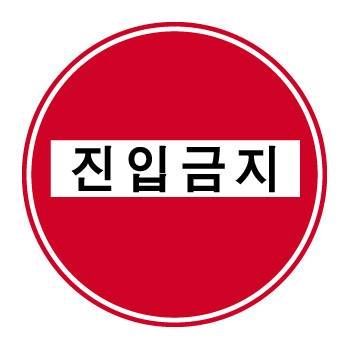
Do Not Enter
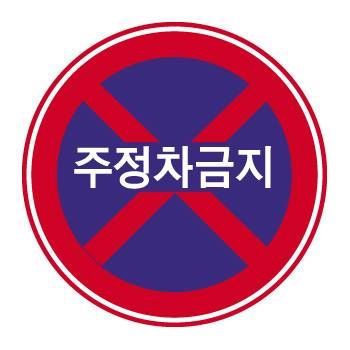
No Stopping & No parking
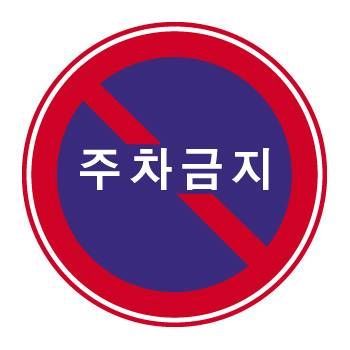
No Parking
Restriction signs in Korean (Credit: Clipart Korea) | Traffic Lights and Signs
While on the road, you’ll mostly encounter horizontal traffic lights that have either three or four signals. A four-signal system has a green left arrow that signals to drivers when to turn left, in addition to the red, yellow, and green.
| Making a Left Turn
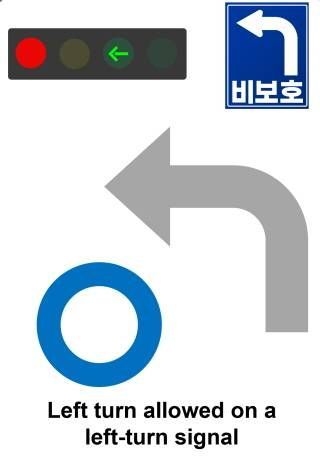
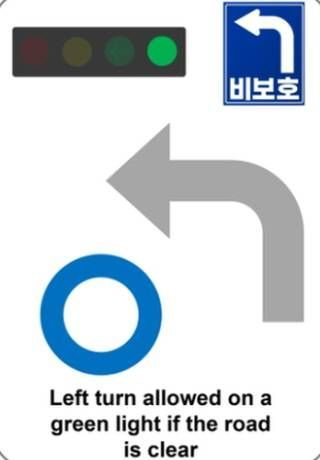
As mentioned earlier, Korea practices right-hand traffic; therefore, you can turn left only under certain conditions. First, the lane must have a left-turn pavement mark. Then, you’ll need to check the traffic lights. If it’s a four-signal system, you will be signaled by a green left-turn arrow. If it’s a three-signal system, look for a blue “Unprotected” (“비보호”) sign. If you don’t see any left-turn arrow on the pavement or the “Unprotected” sign, making a left turn at that intersection is not allowed.
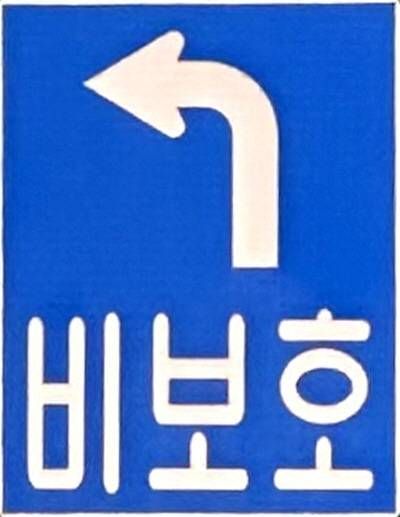 | Unprotected sign (“비보호”)
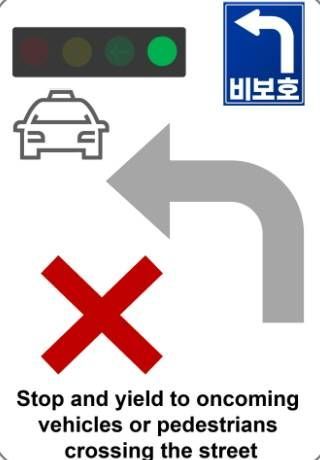
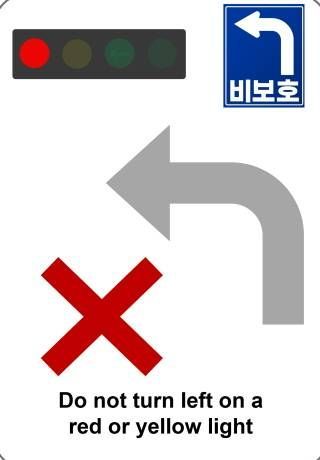
This sign means that you can turn left on a green light at your own risk with caution. You can turn left on a straight green light if there are no pedestrians or cars in your way. Even with the “Unprotected” sign, you must stop at a red light.
| Protected/Permitted Left-Turn
Sometimes, you may even see this “Unprotected” sign on a four-signal system, which is referred to as a Protected/Permitted Left-Turn.
| Making a Right TurnYou can generally make a right turn on a red light as long as there are no oncoming vehicles or pedestrians. However, you must pause for at least three seconds at the stop line or before the crosswalk to ensure there are no pedestrians crossing the road. Although rare, certain high-traffic areas may have a right-turn traffic light installed, in which case you must stop and wait for the green arrow before proceeding.
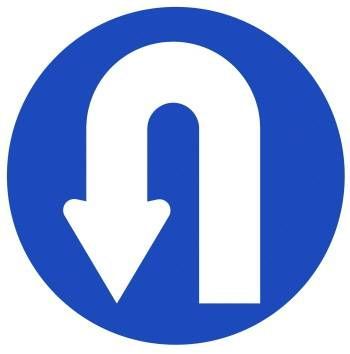 | U-Turns
U-turns are generally not allowed unless you see a U-turn sign. When U-turns are allowed, they must be made over the designated U-turn line when there is no oncoming traffic. Sometimes, U-turns are allowed only under certain conditions written in Korean, which can be confusing for non-Koreans. If you are unsure, make a U-turn on a green left arrow or go around the block to be safe.
| Flashing yellow or red lights
Don’t be alarmed if you come across flashing yellow or red lights; it just means you should slow down or pause to watch out for sudden oncoming vehicles or pedestrians.
| Road Pavement Markings
Road pavement markings are pretty much the same as in other parts of the world: the solid yellow “do not cross” line separates opposing directions, solid white lines mean the same direction and to stay in your lane, and dashed white lines signal that a change of lane is permitted with caution.
However, Korea does have a few distinct pavement markings to take note of so that you don’t hesitate while on the road:
* Dashed Box Line: Indicates where U-turns are permitted; usually accompanied by a U-turn sign and pavement markings.
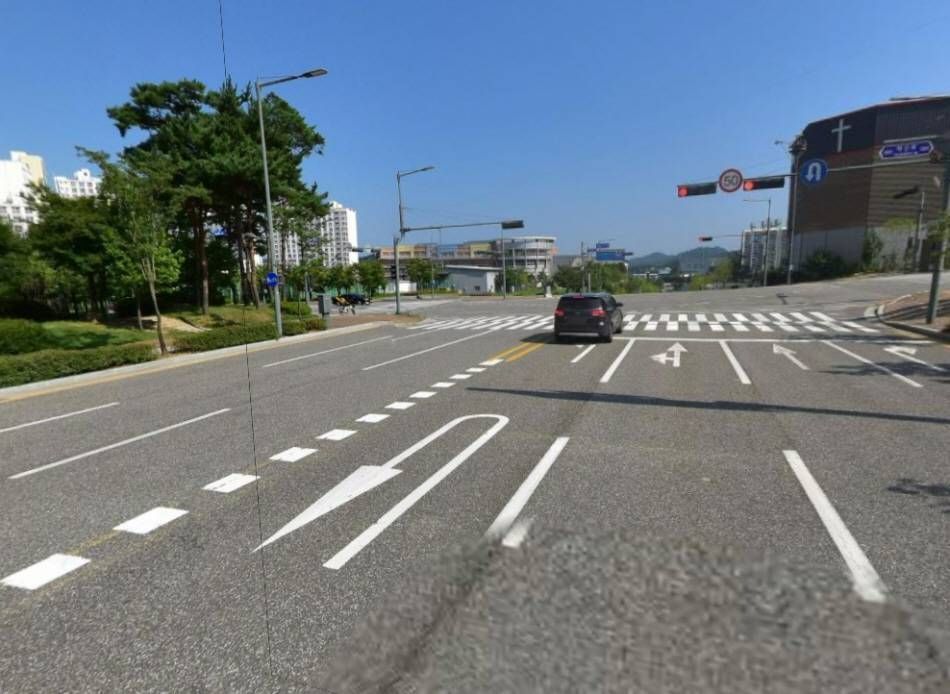
When making a U-turn, turn your car around by crossing over the U-turn line (Credit: Naver Map Street View)
* Blue Line: Bus-only lane or bus parking only.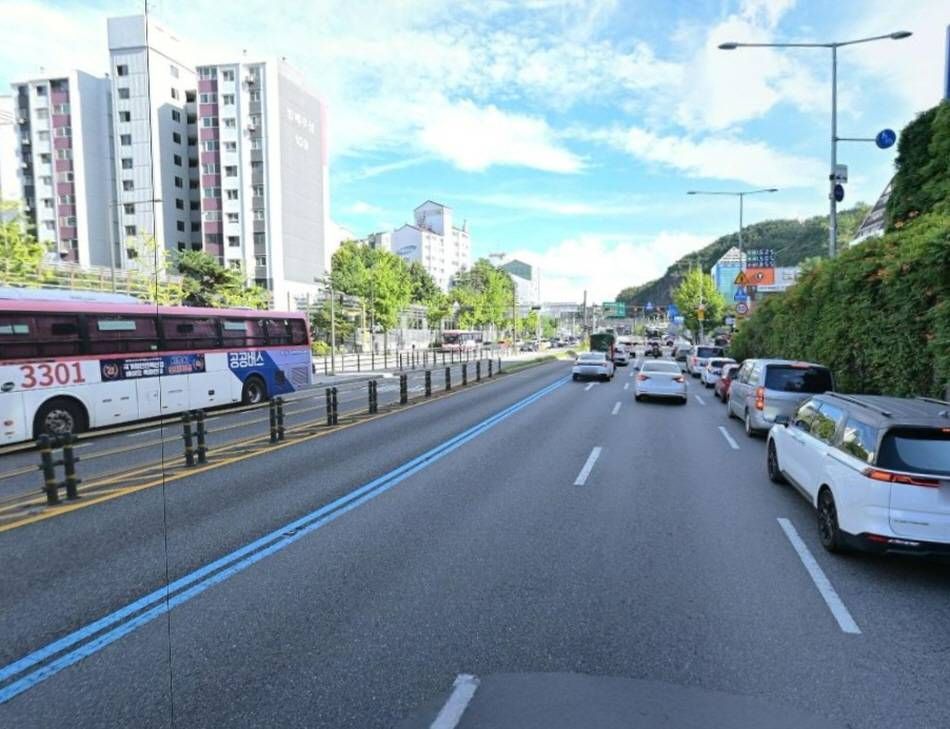
Regular vehicles are prohibited from driving in the blue bus lane (Credit: Naver Map Street View)
* Red-colored Pavement: A School Zone or a pedestrian alert zone; drivers must slow down.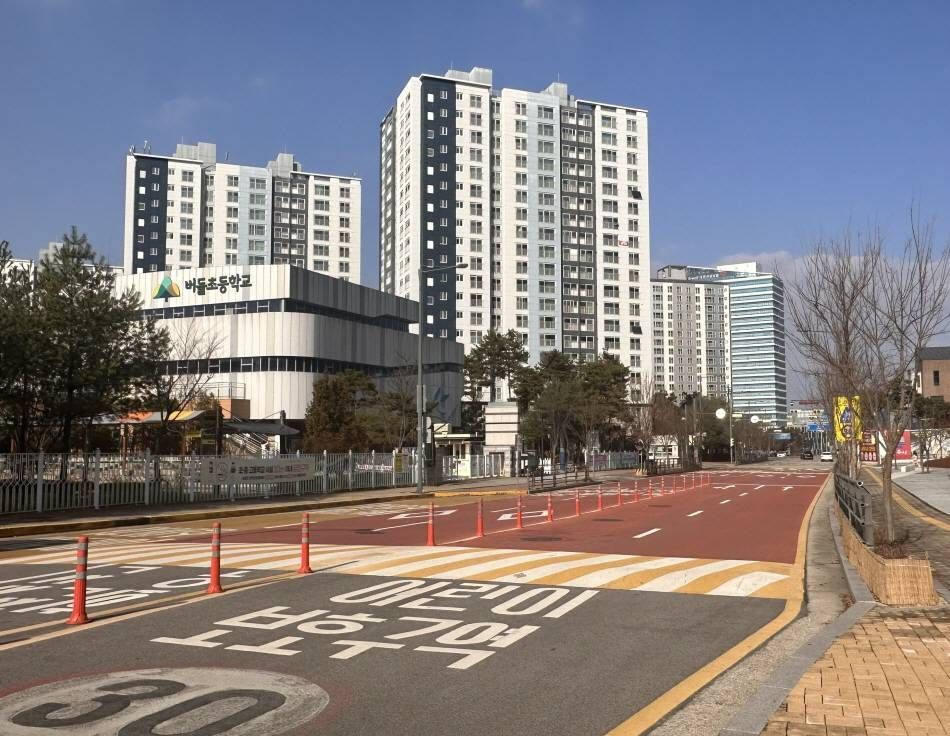
Any time you enter a red-paved area, you must slow down
* Color-coded Lines: Usually a long strip of line in green, blue, or pink that runs at the center of the lane that appears before a junction; these lines guide drivers to the lane they should take to get to their desired destination.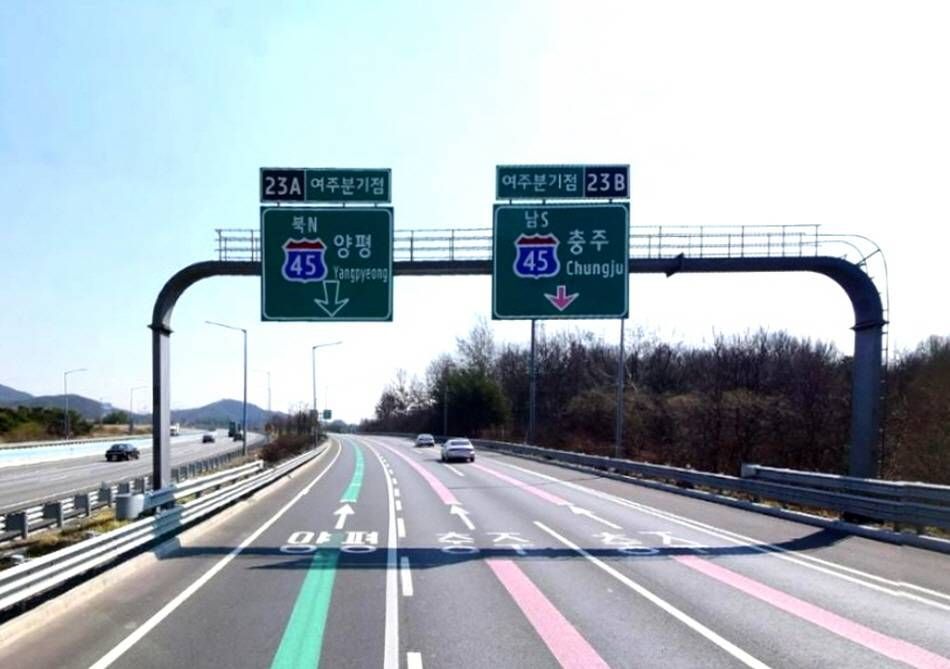
Yeoju Junction at Yeongdong Expressway; the green line leads to Yangpyeong and the red line leads to Chungju (Credit: Naver Map Road View) 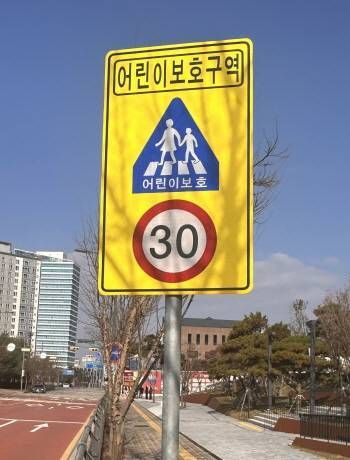 | School Zones in Korea
In an effort to strengthen the safety of child pedestrians, areas within a 300- to 500-meter radius of a school entrance are designated as a school zone, enforcing even stricter speed and parking restrictions, as well as stronger penalties for violations. Drivers are notified of entering a school zone with road signs and red road pavement.
| Speed Limits
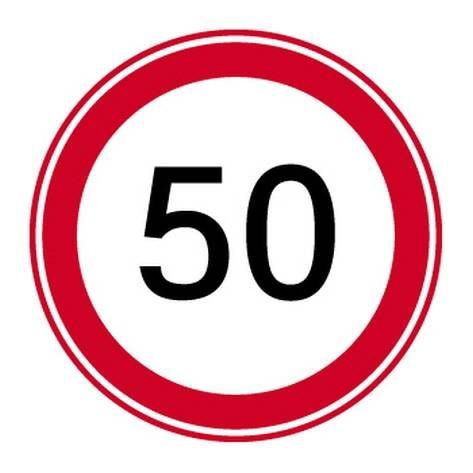
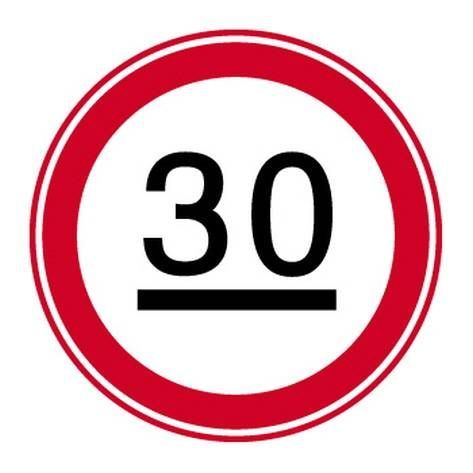
Maximum speed limit & minimum speed limit sign; in Korea, minimum speed limit sign has an underline below the number (Credit: Clipart Korea) Whether it's on expressways or in neighborhood downtowns, Korea relies heavily on speed cameras to control speeding. Speed limits vary depending on the road type you are on, which can largely be classified as below. However, keep in mind that the classifications below are a general guide, and speed limits may change depending on road conditions, weather, and municipal policies, so drivers are advised to keep an eye out for speed limit signs along the road. It may go without saying, but drivers are strongly advised to follow the speed limit at all times for their own safety and the safety of others.
- General roads: Refers to general vehicle roads in downtown, residential neighborhood, free national highways, etc.
- - School Zones: 30 km/h
- - Downtown areas: 50 km/h, unless specified
- - National highways: 60 km/h on one-lane roads, 80 km/h on two-lane roads
- Motorways: Refers to automobile-only roads with minimum and maximum speed limits; pedestrians and two-wheel vehicles are restricted. Motorways can be largely divided into regular motorways, urban expressways in Seoul and the nearby metropolitan areas, and expressways that require a toll fee.
- - Motorways: Min. 30 km/h – Max. 90 km/h
- - One-lane expressways: Min. 50 km/h – Max. 80 km/h
- - Two- or more lane Expressways: Min. 50 km/h – Max. 100 km/h
2. Parking
As soon as you drive into a parking lot or parking garage, you’ll quickly notice that most, if not all, vehicles are parked in reverse. Since parking spaces can be quite narrow, reverse parking is the norm in Korea. If you’re not used to reverse parking, you’ll be relieved to know that almost all rental cars in Korea have built-in rear sensors and cameras to aid the driver.
Parking can get quite competitive, especially in Seoul, city centers, and popular tourist destinations, where parking usually requires a fee. In less populated cities, on the other hand, parking is less stressful and may even allow free parking. If paid parking is controlled by an automated parking gate, you can pay at a parking fee kiosk before leaving or at the parking gate upon exit.
* Designated Parking: Every commercial parking lot is required by law to have a designated parking space for wheelchair users, which is limited to vehicles with disability parking permits. Also, some parking lots have designated spaces for smaller, compact vehicles.
* Electric Vehicle Charging Station: Parking lots with charging stations for electric vehicles are steadily increasing. You may park your car in these spaces if you need to charge your electric vehicle while it’s parked.
* Street Parking: Generally, parking by the street is not advised and is only allowed by a white curb or in a roadside parking box. Parking by a yellow curb or near a bus stop is considered a parking violation, and as with anywhere else, parking on a crosswalk, by a fire hydrant, or near an intersection corner is a serious parking violation.
TIP #1: Parked vehicles are generally identified based on the last four digits of the license plate number, so make sure to remember your car’s plate number or take a photo of it.
TIP #2: Businesses may either offer free parking or discounts if you’ve used their services (e.g., at a restaurant), so check with the staff before leaving the premises.
TIP #3: Because cash is rarely accepted nowadays, you may find yourself stuck in an unmanned parking garage if your international card is the only other payment option you have. We recommend getting a WOWPASS card, a foreigner-exclusive IC card that works like a prepaid debit card, ahead of time.
3. National Highways and Expressways
National highways or expressways are what you’ll be taking if you’re traveling between cities in mainland Korea. Although both connect cities in Korea, they have distinct differences.
| National Highways
Called “gukdo” in Korean, national highways are free public roads that are not necessarily limited to automobiles. Hence, you’re expected to drive through a city’s main road, enter and exit arterial roads, be stopped by traffic lights and pedestrian crossings, and adjust to different speed limits along the way. If you want to travel at a slower pace, enjoy the change of scenery as you pass through different cities, and save some toll money, taking the national highway is recommended.
| Expressways
Expressways are high-speed motorways limited to automobiles. In addition to a maximum speed limit, they also have a minimum speed limit to ensure steady traffic flow. To use the expressway, you must pass through a toll gate and pay a toll fee.
Toll Fees
- To pay with cash or a credit card, you need to stop at the toll gate at the express entry and pick up a ticket, then make your payment at the toll gate booth upon exit. Alternatively, you can use Hi-pass, an electronic toll payment system that allows drivers to pass through the toll gate without stopping. Hi-pass toll gates are on the left and are guided by a blue line, whereas the cash- or credit card-only toll gate booths are located on the right.
- Check with your rental car agency to see if they provide a Hi-pass device so you don’t have to worry about card payment errors or stopping at a toll gate.
-
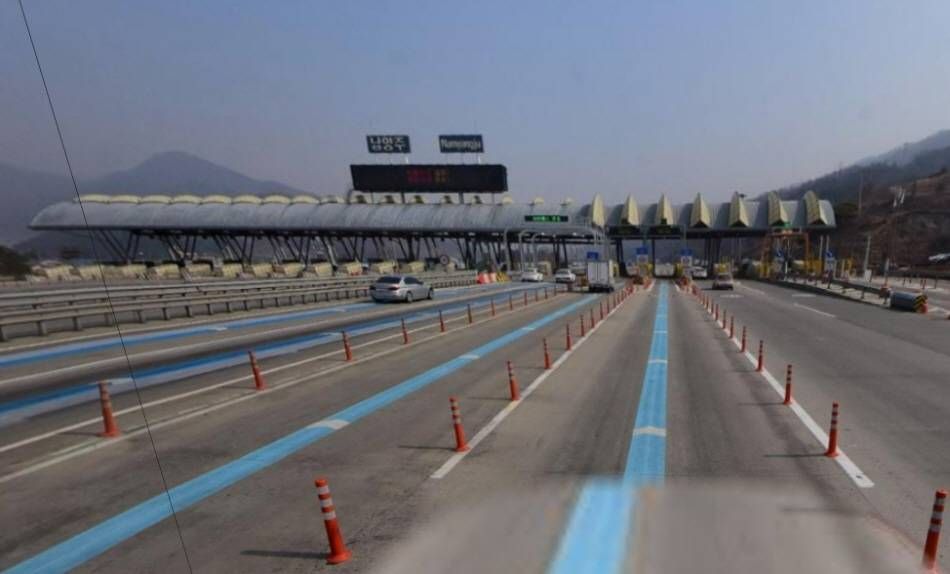
Namyangju Toll Gate, the blue lines lead to the Hi-pass gates (Credit: Naver Map Street View)
Lane Designations- If there are more than three lanes on an expressway, the left-most lane is designated as a passing lane, and the right-most lane is for freight trucks and slower vehicles.
-
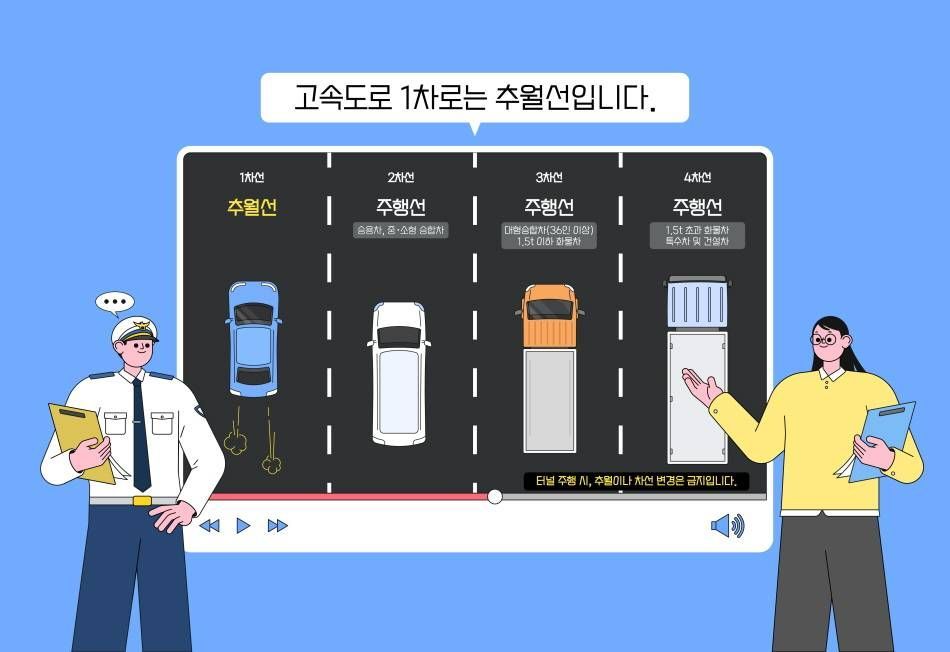
Expressway lane designation visual aid (Credit: Clipart Korea): - 1st Lane – Passing Lane
- 2nd Lane – Travel Lane for regular small to mid-sized vehicles
- 3rd Lane – Travel lane for large vehicles
- 4th Lane – Travel lane for freight trucks
- * Passing and changing lanes are prohibited while driving through a tunnel
Rest Areas & Drowsy Rest Areas- Unlike national highways that pass through city downtowns, once you enter an expressway, you are not allowed to pull over to the shoulder unless you find yourself in an emergency situation. If you need to take a break, stop by the nearest rest area (“휴게소,” pronounced hyugeso) or drowsy rest area (“졸음 쉼터,” pronounced joreum shwimteo). Major expressway rest areas in Korea are complete with a food court, snack bars, regional specialty souvenirs, restrooms, and gas stations—some are even a destination in themselves. A drowsy rest area is a small parking area on the side of the road established to prevent drowsy driving, allowing fatigued drivers to pull over and take a short nap or get some fresh air.
-
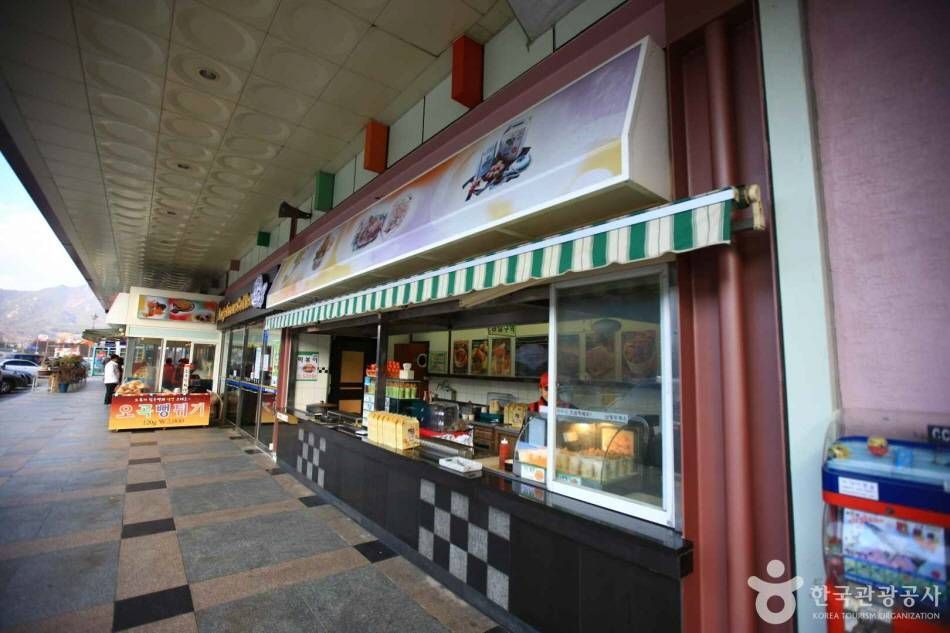
Sancheong Rest Area
4. In Case of a Car Accident
Despite all the precautions, accidents can still happen. If you get into an accident, contact your rental car agency right away. Report the severity of the accident and make sure to let them know if there are any injured persons involved. Your rental car staff should be able to assist in contacting emergency responders, filing a police report, and providing instructions on what to do next. It’s also strongly recommended to take photos or video clips of the accident for documentation.
As car insurance is required by law in Korea, you should be covered for minor accidents—such as a fender bender—by your rental car agency. However, the scope of insurance coverage may vary by agency, so make sure to check in advance what is covered. If you get involved in a severe accident where you need medical attention or if the situation leads to a legal dispute, you are advised to contact your embassy to receive the appropriate help you may need.
5. Side Notes & Tips
Navigate Your Way: You may have already heard of Naver Map or Kakao Map for finding routes and directions, but did you know they also offer GPS navigation services in English? Not only do these map apps come in handy for finding travel routes, but they’re extremely useful when you’re on the road!
- Download: Naver Map (Android / iOS) / Kakao Map (Android / iOS)
Get Transportation Cards: As mentioned earlier, don’t rely on cash or your international card alone. If you have both a Tmoney card and a WOWPASS, you won’t have to worry about getting stuck in frustrating situations when it comes to paying for parking, fueling, toll fees, and other service fees while driving.
Practice Defensive Driving: Although most drivers are well-mannered, defensive driving is key to safety, as you may encounter vehicles that change lanes quickly without signaling, taxis or buses in a rush, traffic violations by motorcycles, jaywalking, and other unexpected situations.
New to Roundabouts? If you encounter a roundabout, remember to yield to the traffic that is already in the roundabout.
Fill it up! Fueling: Korea has both full-service and self-service gas stations. In Korea, gasoline is usually indicated in yellow, and diesel in green or blue. If you’re unsure, seek assistance from the staff at the nearby office. You can use a navigation app to check estimated fuel price ahead of time. Also, take note that fuel is measured in liters.
Driving in Winter: If you are from a tropical or subtropical region and have never experienced driving on winter roads, be aware that roads can become very slippery due to black ice or heavy snowfall. Drivers are advised to drive slower than the regular speed limit and maintain a longer safe following distance during adverse weather conditions. However, we recommend that you consider other methods of transportation over driving.
Still worried? Check KoRoad for an English driving manual or YouTube videos for other driving tips and rules; you can also use the street view or expressway camera features on Naver Map or Kakao Map to check for directions or traffic conditions, before getting on the driver’s seat.
Related content
- Hi-Pass
* Check out available rental car promotions and discount coupons
- 1330 Korea Travel Helpline: +82-2-1330
- 1330 Text Chat: https://m.site.naver.com/1rEid
- (Korean, English, Japanese, Chinese, Russian, Vietnamese, Thai, and Indonesian)
* This column was last updated in November 2025, and therefore the information may differ from what is presented here. We advise you to check for updates before visiting.

観光通訳案内電話1330・LIVE CHAT
電話・チャットで韓国観光に関するお問合せ、運営時間:7:00~24:00(韓国標準時)

インターネット無料電話を開く(Wifi接続時無料)

有人ライブチャットを開く(インストール不要)